Customized Cutting Horse Training  |   Private Cutting Clinics  |   Zane Schulte Trainer of the Year Award
Bill Riddle Cutting Video  |   Message Board  Cuttin Tips  Home


Zane Schulte Trainer of the Year Award

Riddle Receives 2002 Zane Schulte Trainer of the Year Award

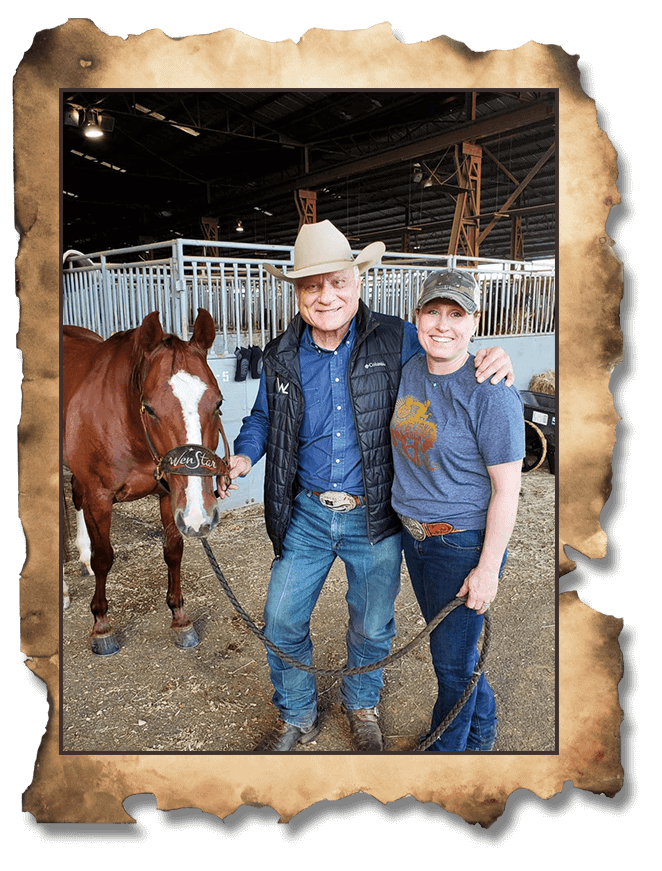
The second annual Zane Schulte Trainer of the Year Award was presented to Bill Riddle on December 7, 2002. The presentation was made during the NCHA Hall of Fame party held at the 2002 World Championship Futurity in Ft. Worth, Texas.

Zane Schulte, whose life was claimed by cancer at age 16, exemplified a spirit of inspiration just by being who he was. It is in his memory that the award was created to honor a trainer who serves the industry through leadership, integrity, service or any combination thereof. It is a humanitarian award and is not about arena earnings.

In the interview that follows, Bill shares about how he got started in cutting and became a successful trainer and showman. He also provides some sound advice for the non-pro, as well as some insight about his "success" in life. His perspective can be summed up in a statement he made after receiving the award: "Your health and the talents you are given are not an accident, and I praise God that he has allowed me to make a living doing something that I love to do…" Amen, Bill!


Like so many successful horsemen, Bill Riddle grew up in the world of horses and competing. His father was a farmer, but he loved to rodeo and rope calves. His older brother, Delbert, was a fabulous calf roper who everyone expected to become a world champion calf roper, but he was killed in WW2 at Iwo Jima. Bill grew up listening to stories about him and started riding as a child. He went to college on a calf roping scholarship and also wrestled steers and team roped.


Tell us a little about how your got started in cutting.

After college, I taught school for 10 years, but I realized one day I was teaching just to support my rodeo "habit". That's when I decided it was time to turn my attention to horses.

I went to work for my brother in 1977, cleaning stalls, working colts, and starting two year olds…the things everybody does when they start training. We had rodeoed together a lot but he always had a cutting horse he piddled with. But in 1975, he had a mare called Lenaetta that Shorty Freeman, his father-in-law, rode for him in the NCHA Futurity and won. I had been competing in rodeo for years trying to win $400 day monies. He showed me a copy of the check for, I think, $35,000. I thought, "Man, that's a better deal!" That's when I got interested in riding cutting horses. Up until then, cutting had always been boring to me. Except at a rodeo one year, I remember standing back behind the bucking chutes, getting ready to pull a bull rope for a buddy of mine, and they were showing cutting horses. Matlock Rose was showing a mare called Stardust Desire and the announcer, Nat Fleming, began talking about the mare. He said, "Watch this mare. Look at her front feet, the agility here. Watch her keep that cow out of the herd." So, I started watching the mare. I had occasionally ridden some cutting horses but that was the first time I realized just how pretty they worked. From then on, I was interested in cutting horses.


What are some of your most outstanding accomplishments?

Well, in the horse world, when I was a sophomore at Midwestern State University, I won the calf roping finals at the college finals in Laramie, Wyoming in 1965. In cutting, my first major win was the Derby in 1981 on a mare named Docs Otoetta. She was a Doc Bar mare out of an Oto + Ponde cross mare. The year the mare was five, John Paxton hauled her for the World and won the non-pro title, winning $93,000 and setting a record on her. When I won the Derby, Crawford Farms was developing their training program. Dick Gaines and Paul Crumpler suggested that Crawford Farms hire me, which they did. For the next five years I got a chance to ride a lot of really good horses and get established as a trainer and a showman. From there I went to Fares Ranch and won the $1 million Gold and Silver cutting. The next year, Fares Ranch had a dispersal sale. The new owners of Aglows First Rio and Fannins Sugar both had me show them at the Super Stakes that year. I won both the four- and five-year-old championship. Those two back-to-back wins were pretty neat.


Bill, you are the second recipient of the "Trainer of the Year" award, recognized for your leadership and service outside of the arena. Tell us a little more about your work outside the arena – both with the NCHA and your Christian cutting camps – and what this award means to you personally.

With regards to the NCHA, I think it was probably in 1982 that I got on the executive committee. I realized that if we were going to get the judging straightened out, everybody had to interpret the rules the same way. Judges didn't have to have the same taste in the style of horse, but the rules needed to be called the same way. I had been a basketball official when I taught school and had a casebook, along with the rulebook, to tell us how to apply the rules to a certain situation. So I talked to Danny Dunn about a casebook for cutting to make the rules more uniform. He told me to go ahead and prepare a draft, which I did in the summer afternoons after I was finishing working horses. Once it was complete, it was given to the executive committee, and they established a committee to review and finalize it. That was my first real activity with the NCHA. I then ran for and won a seat on the executive committee. I've enjoyed my association with the NCHA at the administrative level. It's been a challenge. I've lived from the time of no monitor system and "good ol' boy judging" to a time when—while no one would say it's perfect—it's so much better than it used to be. If you don't believe that, just go get some of the old films and look at them. I'm proud of that work and being in the Hall of Fame.

But truthfully, I think the biggest honor that I've received as a cutter, is the Zane Schulte Trainer of the Year Award. To me, that's the greatest honor because it was established as a result of that young man's life. I don't think you can accept that award without thinking about the way Zane lived. In 16 years, he lived everyday a life that most of us strive for 60 to 70 years to live and never accomplish it.

The Christian cutting camps are really unique. When I was 14 years old, God really put on my heart that I should do something for Him, or rather with Him, when an Evangelist told me, "You know, son, God can use you on a horse." I went to church and had a relationship with Christ, but I didn't understand what he meant at that time. I would listen to preachers talk about going into service for God, and it always seemed to involve going to Africa or being a preacher. Neither one of those areas of service appealed to me and in my heart of hearts, all I wanted was to rodeo and rope calves. That's what stirred me.

About nine years ago, I met Dawson McAllister. When he called me and introduced himself the first time—I didn't know who he was at that point—he said, "I understand you are a cutting horse trainer. I also understand that you are a Christian." I said, "Well, yes sir, but not a very good one." Dawson was very active in youth ministry, an organizer of youth conferences. He told me he was really concerned about the horse industry and felt like something needed to be done in the horse show, cutting horse world, to make people aware that there was something besides a horse to put our faith in. At that point, I wasn't ready to do anything, but he invited me to a dinner where he was speaking to horsemen. He later invited me to attend a youth conference and—I don't know why he did it—he had me stand on the stage with him that night when he gave the invitation. Out of the 9,000 in attendance, about 1,500 walked the isle. My life was never the same after that. It changed the way I thought about things.

Shortly after that, we established our first Week with the Stars camp at Mt. Pleasant, Texas. That first year, we included barrel racers, ropers, reiners, pleasure riders and cutters. We only had nine cutters participate. Dawson had also met with Joe Howard Williamson, who he invited to help with the camp. Joe Howard had been a missionary to Africa. At the next year's camp, we cut it down to barrels, reining, and cutting. And the following year, we had our first "cutters only" camp with about half kids and half adults. After about three years working with us, Joe Howard started having his own camps and it seemed like the younger people went to his camp while the adults came to ours.

This year we'll have our eighth camp at Strawn Valley Ranch in Strawn, Texas—just outside Ranger. Don Holder has been very gracious to give us the facility to use this year. It has four indoor arenas and 3500 acres. The average at our camps is 44 years of age. We take 60 riders per session, and about half of those are returning participants. Over the years, we've had help from Doug Jordan, Shannon Hall, Tommy Marvin, and my brother, Terry Riddle—after he changed his relationship with Christ a few years ago. This year, we have those guys, plus David Stewart, Allen Crouch, Bruce Morine. We just continually add to the number of guys that are involved.

We work very hard, very diligently during the camp to teach them to ride a cutting horse, but we also have two bible-study sessions each day for five days. Initially, it was a "kid dream" from Dawson. He wanted to get kids to come and be around people they could respect, to get close to an instructor, hence the name "Week with the Stars." But it turned out that the kids went to Joe Howard, and the adults came to us. It's now a retreat sort of camp where for five days you don't think about anything but riding your horse and God. We have exceptional music. All the trainers donate their time, which is a major sacrifice. That's our time back to the industry each year. Over the years, we've seen lots of really special, neat things happen in this ministry. You can tell by the way I talk about it that I'm really excited about it.


You mentioned during the banquet that you feel blessed to have had the chance to earn a living doing something you love to do. What is it about cutting that has kept you inspired over the years?

Since I was a kid, I've been excited about competing and using a horse, but I never thought you could make a living riding a horse. I always wondered what I would do when I quit roping. I was teaching, and just didn't think I would enjoy being a principal for the rest of my life. Those are wonderful, honorable people…very special folks. I made an effort to be a good teacher, but it just wasn't really me. About the time I was drawing close to an age, you know, when rodeo cowboys begin to slow down, I noticed that Pat Patterson and other cutters who were older at that time, were still really competitive. I saw that there was a way to make money, and I came in just when the business was getting really hot and taking off. There was so much excitement around the horses and it got me going. I can remember, as a schoolteacher, I would get up and go to work at the same time every day and get off at the same time. I'd wonder what I was going to do with the rest of my day, and I'd always go to the horses to do something. I feel blessed to have been given enough talent to succeed! I see some young men and women in this industry who would like to make a living cutting, but they just can't. I can't imagine anything more frustrating than to really love this and not be able to do it successfully. So, I just think you are really blessed if you like it and can do it successfully.


What do you feel is your greatest responsibility as a professional trainer (in general as a career) in terms of service?

The way I see it—and it gets me in trouble sometimes—is to try to direct my customers, especially the news ones, in such a way that they won't get themselves in a big jam. And that's hard to do. People have a difficult time learning about the type of horse they need. And, while you have the stories of the "off brand" horse that does well, that's like buying a lottery ticket; it seldom ever happens. Teaching customers to keep the odds in their favor is a major responsibility of a trainer. If you'll teach them that, then they can stay in this business a long time, no matter how much money they have. It gives them a chance. Things aren't always going to work out, but I see people trying to play this game that just don't give themselves a chance to succeed. They aren't going to stay around very long.


You've been extremely successful in cutting. What are the factors that have made the difference…that have produced excellent performances, consistently, instead of average ones?

The layman answer to that question would probably be "luck." But, as I look back, I see that I have had the opportunity to work for four fabulous groups of horseman and ride great horses. You can either say that God had a plan and executed it in spite of me or that I was extremely lucky.

The truth is that it doesn't matter how good a trainer you are. If you are going to show successfully in horse shows, you've got to have somebody help you at those shows who cares about you being successful. You can't just take some kid that's busy thinking about 14 dozen things and be successful. I've had some of the best hands in this business working for me over the years, from Paul Hansma to Guy Woods. They were so helpful and loyal to me. It seems that the dedication and loyalty they showed towards me must have bled over into the rest of their life. They are both good family men, and it's amazing how successful they have been. Having guys like them around me was tremendously beneficial to my success as a trainer. I cannot omit Jeanine Koehler from the list of those who participated in my success as a trainer. Jeanine kept the horses in great shape and paid close attention to their needs. I won the year-end trainer title twice. Each time, Jeanine was working for me.

My wife, Anne, has always supported me. In the early days, she helped prepare the horses for the shows as well as handle the financial end of the operation. These days, she does the finances and health records. I'm fortunate to have two daughters, Kelly and Havey, who are also willing to help.

As a trainer, what have been your highest "highs" and lowest "lows" in your career?

Winning the $1 million cutting. When I realized I had won it, my knees gave way and I had to lean back to catch myself. I put my hands on a plastic trashcan, but it gave way and just sort of collapsed, so I just sat down on the side of it.

There are more lows than highs: the disappointment of losing a cow in the semi-finals on several different horses; the disappointment of going out in the first go around. Really, most of the lows in cutting will go right back to something that happened at the Futurity. There are enough of those in everyone's life to last a lifetime.


How do you pick yourself up when you've had a series of bad runs?

What I normally do, when the "wheels just come off"—that's the expression I use when you pick a bad cow, kick a horse in the wrong place, just make a bad mistake—is go home and take a day or so off and get it completely off my mind. Then, I'll begin to work my young horses. As I ride those young horses, life comes back to me.

So, go clear your mind and analyze what you are doing, just like all the successful competitors in other sports. Take Tiger Woods as an example. He was a very young man when he won the Masters by twelve strokes, but because coaches he respected told him that if he continued to play without changing his game he would have some great days like that and a lot of bad ones, he went home after winning that Masters and proceeded to change his golf game.

Now that, to me, says a lot about the importance of good coaches. But us "bravo" horsemen know just what we are doing; we don't need any help. Now, to me, that just doesn't compute. You should go back to your films, go to someone you respect on occasion, and watch trends. When I see a trend coming, I try to see what that guy is doing because this business is trendy. What's popular, the kind of horse that's popular one year, may be a little different three years later. I really respected the late Pat Patterson. I had watched him through the years, and he changed the way he showed a horse, the way he trained a horse. It wasn't drastic, but I watched him make about three changes in my career. While other guys his age were making excuses, Pat was finding solutions. His horses continued to win right up until the point of his death. And that's been my goal: to never get so smart that I can't learn something. When things begin to go wrong, there's only two reasons: either you are "a foot"—by that I mean that your horses just aren't strong enough—and in that case then you need to recruit; or you are doing something wrong and in that case you need to fix it. My daddy used to say—not literally, but this is the thought process—"You can lie to the world, but you better not lie to yourself." It often seems to me that our pride gets in the way of our horse training.


What's the most important advice you can offer non-pros?

1. Be sure that you are riding for recreation, to have fun.
2. Find a reliable trainer.
3. Buy good horses.
4. Practice. Practice. Practice.


Bill Riddle Cutting Horses

Phone: 580/662-2180
Fax: 580/662-2893
Rt. 1, Box 61 • Ringling, OK 73456

Bill@BillRiddleCuttingHorses.com
 

Bill Riddle Cutting Horses. All rights reserved. Proudly Maintained & Hosted by Big Sky Internet Design, Inc